
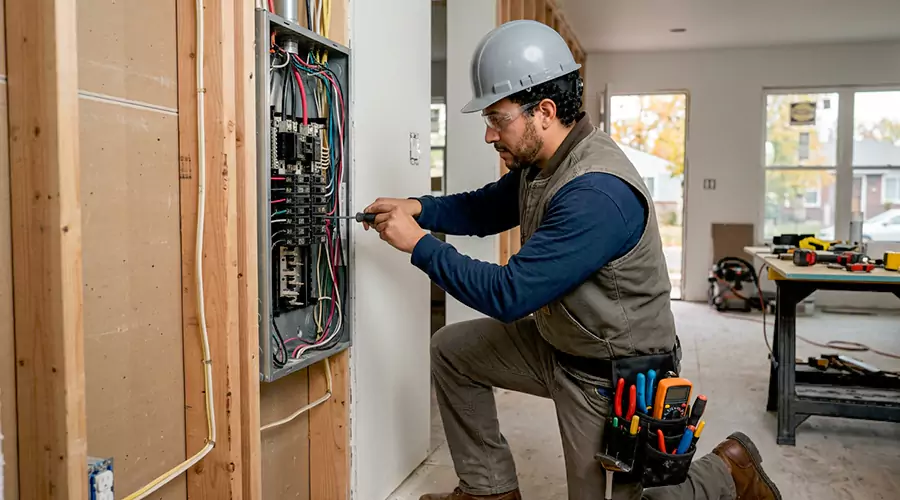
Homes in the United States often show clear signs your home needs electrical rewiring when the system becomes outdated or unsafe. Common signs include frequent breaker trips, flickering lights, burning smells near outlets, and two-prong outlets. These issues show that the wiring cannot support modern power use or has started to fail, making whole house rewiring necessary in some older homes. Ignoring these signs increases the risk of fire and damage to appliances. A licensed electrician can inspect the system and confirm if rewiring is needed. Early action improves safety and supports reliable power use throughout the home.
What Causes Frequent Circuit Breaker Trips
Circuit breakers shut off power to prevent overheating and damage. Frequent tripping is one of the most common electrical wiring problems in homes and shows the system is overloaded.
What Repeated Tripping Indicates
Frequent trips are strong home rewiring signs that circuits carry more load than they should. Older wiring struggles with modern appliances. This increases heat and long-term wear.
Why Flickering or Dimming Lights Occur
Lights that flicker or dim indicate unstable electrical flow. These are clear outdated electrical wiring symptoms that should not be ignored.
Common Causes of Lighting Problems
- Loose wiring connections
- Circuits overloaded by appliances
- Voltage fluctuations in older systems
How Burning Smells or Discoloration Signal Danger
A burning smell near outlets or panels is one of the strongest electrical wiring problems in homes. This often means wires are overheating.
Why This Requires Immediate Attention
Heat buildup can melt insulation and expose live wires. This increases the risk of electrical fires inside walls. Immediate inspection is necessary to prevent further damage.
What Two-Prong Outlets Reveal About Your Wiring
Two-prong outlets are a clear sign of old house wiring issues. These outlets lack grounding, which is required for safety.
Risks Linked to Outdated Outlets
- Increased risk of electric shock
- No protection for sensitive electronics
- Limited compatibility with modern devices
Why Buzzing Sounds Indicate Electrical Problems
Electrical systems should run quietly. Buzzing sounds often point to hidden electrical wiring problems in homes.
What These Sounds Mean
Loose connections cause vibrations within outlets or panels. Electrical arcing may also produce noise. These problems often worsen over time.
How Faulty Outlets Show Wiring Issues
Outlets that stop working or fail intermittently are strong home rewiring signs. These issues often point to deeper wiring problems.
Signs of Outlet Failure
- No power despite a working breaker
- Intermittent power supply
- Sparks when plugging in devices
What Overuse of Extension Cords Means
Heavy use of extension cords shows your home lacks proper electrical capacity. This is a key indicator of when to rewire a house.
Why This Is a Warning Sign
Too many devices on one circuit increase load demand. This raises the risk of overheating and failure. Rewiring can improve circuit distribution.
Why Aluminum Wiring Creates Safety Concerns
Aluminum wiring is a known example of outdated electrical wiring symptoms found in older homes. It behaves differently than modern copper wiring.
Problems Linked to Aluminum Wiring
- Expands and contracts more than copper
- Connections loosen over time
- Higher risk of overheating
How Electrical Shocks Indicate Grounding Issues
A shock when plugging in a device is not normal. This often points to grounding problems or damaged wiring.
What This Means for Your System
Electrical current may not follow a safe path. Improper grounding increases the risk of injury. Immediate evaluation is recommended.
What Age of Home Tells You About Wiring Condition
Homes older than 30 years often have outdated electrical systems. These systems were not designed for modern energy use.
Common Outdated Electrical Wiring Symptoms in Older Homes
- Limited number of circuits
- Aging wire insulation
- Panels with lower capacity
Which Signs Your Home Needs Electrical Rewiring Require Immediate Action
Some electrical issues require urgent attention while others allow time for planning. Understanding the difference helps you respond correctly.
| Warning Sign | Risk Level | Recommended Action |
|---|---|---|
| Burning smell | High | Call electrician immediately |
| Frequent breaker trips | Medium | Schedule inspection soon |
| Flickering lights | Medium | Diagnose wiring |
| Two-prong outlets | Medium | Plan upgrades |
| Dead outlets | Low to Medium | Inspect circuits |
Understanding Professional Electrical Rewiring
Electrical rewiring is often necessary when a home's wiring becomes outdated, damaged, or no longer meets current electrical safety standards. A professional inspection helps identify issues such as worn insulation, overloaded circuits, faulty connections, or other conditions that may increase the risk of electrical problems. The findings determine whether partial rewiring or a complete system upgrade is the most appropriate solution.
Rewiring projects can involve replacing old wiring, upgrading circuits, and improving the overall safety and reliability of the electrical system. After the work is completed, testing and inspections are typically performed to verify that the system operates correctly and complies with current electrical codes. Proper rewiring helps support safe, efficient, and dependable electrical performance for years to come.
When Partial Updates Fix Electrical Wiring Problems in Homes
Partial rewiring can resolve localized issues without replacing the entire system. This approach works when problems are limited to specific areas.
Situations That Reflect Minor Home Rewiring Signs
- One room shows consistent issues
- A single circuit fails repeatedly
- Small renovation projects require updates
When to Rewire a House Based on System Condition
Full rewiring replaces outdated wiring throughout the home. This is required when multiple problems appear across different areas.
Indicators That Show Serious Old House Wiring Issues
Widespread issues suggest the system is no longer safe. Older materials increase long-term risk. A full upgrade brings the home up to current code.
What Happens During Electrical Rewiring in Homes
Rewiring replaces old wires and installs new circuits that meet modern standards. This process may involve opening walls to access wiring paths.
Key Steps That Resolve Outdated Electrical Wiring Symptoms
- Inspect existing wiring
- Remove unsafe components
- Install new wiring and outlets
- Test the system and complete inspection
What Affects Cost When You Notice
Rewiring costs vary based on home size and project complexity. Older homes often require more labor due to limited access.
Main Cost Factors for Electrical Wiring Problems in Homes
- Size of the home
- Condition of existing wiring
- Local labor and permit requirements
How to Confirm Home Rewiring Signs With a Professional Inspection
A professional inspection provides a clear answer. Electricians evaluate system performance and identify risks.
What an Inspection Covers for Outdated Electrical Wiring Symptoms
- Load testing of circuits
- Visual inspection of wiring
- Panel capacity evaluation
What Steps to Take When You Notice
Electrical issues should not be ignored. Early action helps prevent more serious problems.
Practical Actions for Electrical Wiring Problems in Homes
- Schedule a licensed inspection
- Replace damaged outlets
- Plan upgrades for outdated systems
Final Takeaway for Homeowners
Electrical warning signs should never be ignored in any home. Issues like flickering lights or burning smells often point to deeper wiring problems. A licensed inspection confirms the condition of your system. Early rewiring improves safety, reduces fire risk, and ensures your home supports modern electrical demand.